


After the PC, the internet and the smartphone, artificial intelligence is currently emerging as the fourth major technological innovation in the history of digitalisation. But what will happen when supercomputers become available that can process the enormous amounts of data associated with AI? Forschungszentrum Jülich, one of Europe’s major interdisciplinary research institutions, has been seeking answers to this important question about the future for some time now. During an on-site visit, researchers explain the interplay between AI and supercomputing, using examples from current projects.
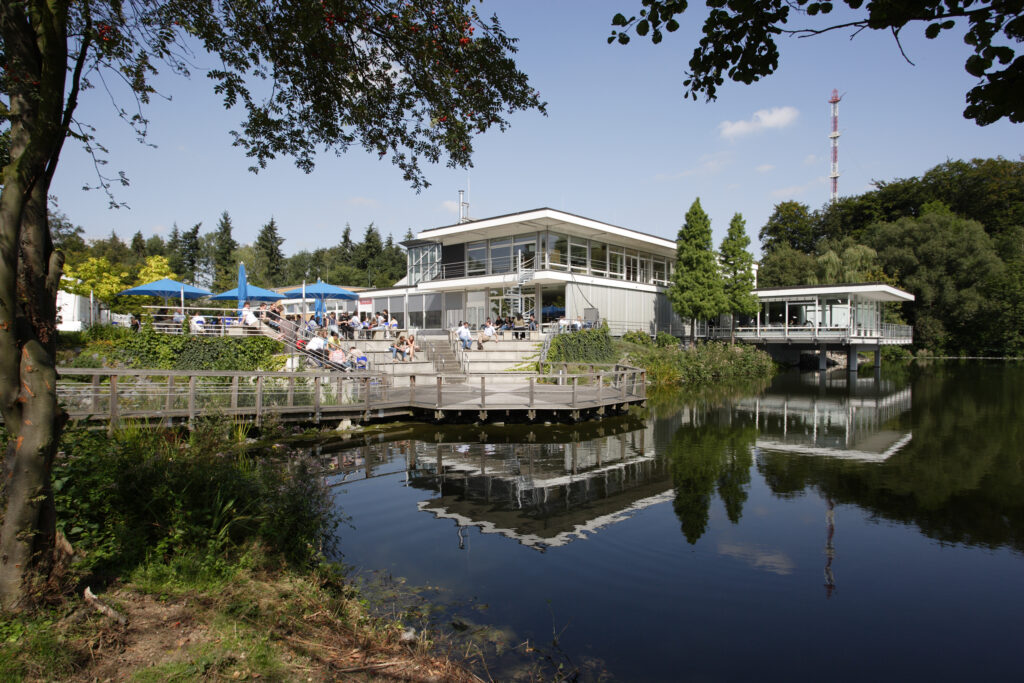
The research centre is set amid greenery, surrounded by around 100,000 trees in the Stetternich Forest near Jülich. Around 7,500 people work there and at the 18 branch sites in Germany and around the world, including some 1,200 visiting scientists from about 80 countries. Together, they are working on solutions to the major societal challenges of our time: How can we succeed in the energy transition and in limiting climate change? What challenges arise from the increasing digitalisation of society? Will we succeed in understanding the human brain? And how can we enable the transition towards a bio-based and sustainable economy? Numerous scientific infrastructures are used for cutting-edge research, including facilities for supercomputing and quantum computing, energy and atmospheric research, as well as high-resolution electron microscopy, imaging techniques for brain and plant research, and neutron scattering instruments. In addition, the Jülich Supercomputing Centre (JSC) at Forschungszentrum Jülich operates one of the most powerful supercomputer infrastructures in Europe and hosts Europe’s first exascale supercomputer JUPITER.