


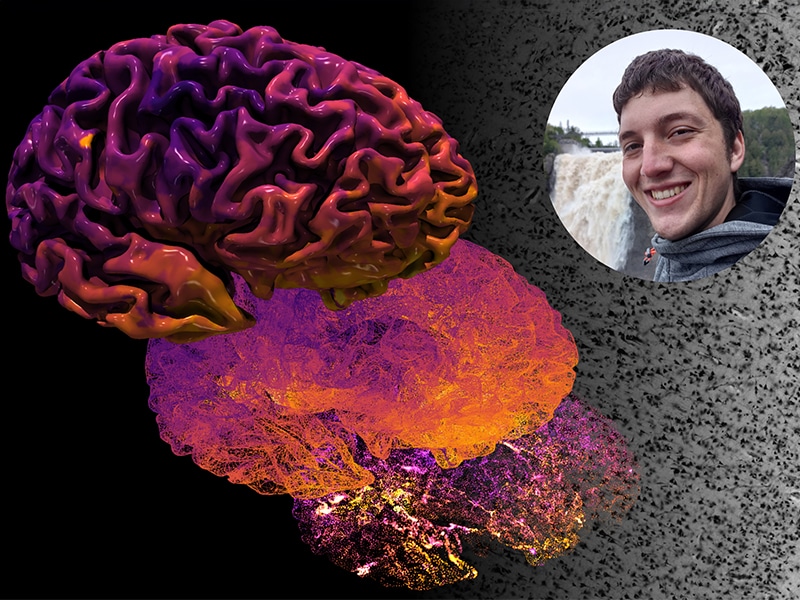
You can find the recording of the event here.
Since the 1990s artist and filmmaker Shu Lea Cheang has dealt with (emerging) digital technologies as theme and tool in her works. Artificial intelligence is a central aspect in this context and is addressed in the interconnected ‘landscapes formations’ on view at the Ludwig Forum, as Cheang herself describes her multimedia installations. After an introduction by curator Holger Otten to the current exhibition Shu Lea Cheang. KI$$ KI$$, Dr. Christian Schiffer will highlight the benefits and applications of AI from a scientific perspective. He will present current and future developments of AI methods for investigating the structural organisation of the brain.
The “Structural and Functional Organisation of the Brain” department (INM-1) at the Institute of Neuroscience and Medicine at Forschungszentrum Jülich develops detailed anatomical models and three-dimensional maps of the brain. These help researchers to gain a better understanding of the brain’s structure. Artificial intelligence is used to analyse tens of thousands of high-resolution microscopic images of brain sections that have been digitised at INM-1 over many years. The images provide fascinating insights into the complex structure of nerve cells and their connections. Dr Christian Schiffer presents the scientific, methodological and technical challenges of this project.
Dr Christian Schiffer leads the INM-1 team “Large-scale AI for Brain Mapping” at Forschungszentrum Jülich as well as the eponymous junior research group of the Helmholtz AI Network within the Helmholtz community. His work lies at the intersection of artificial intelligence, supercomputing, and neuroscience. He focuses on developing innovative AI methods for analysing the structural organisation of the brain using large microscopic image datasets, as well as their efficient implementation on supercomputing systems.
The event is taking place in cooperation with vhs Aachen accompanying the exhibition Shu Lea Cheang. KI$$ KI$$. The event will be held in German.
Photo: © Forschungszentrum Jülich